
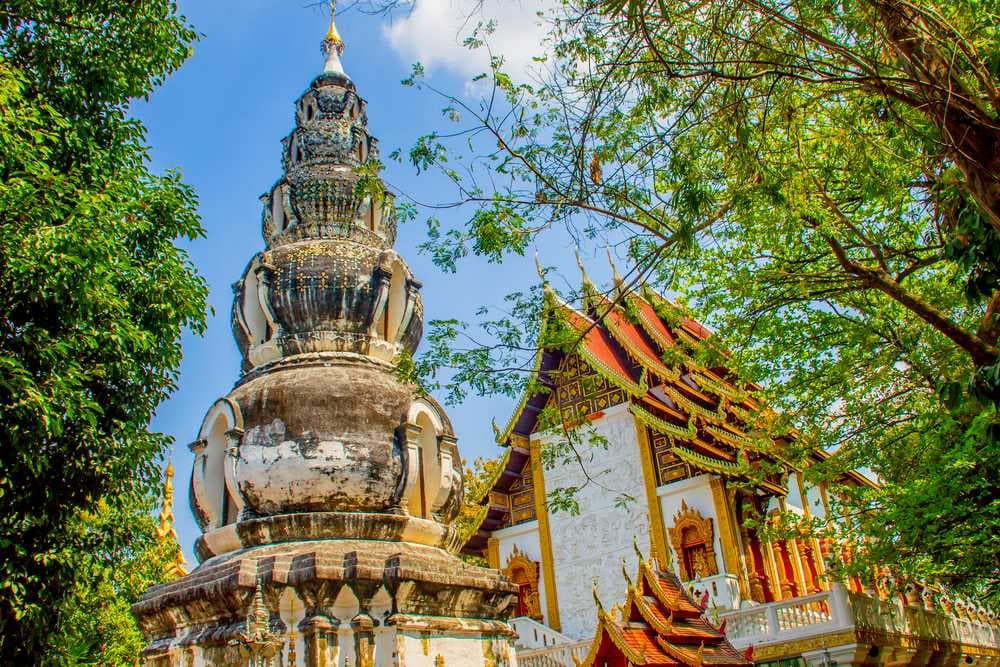
Wat Ku Tao is a distinctive and historically significant temple in Chiang Mai, primarily known for its unique chedi.
Key Features:
- The Unique Chedi:
- The most striking feature of Wat Ku Tao is its unusual chedi, which is often described as resembling a stack of watermelons or a series of diminishing spheres.
- This distinctive design sets it apart from other temples in Chiang Mai, which typically feature more traditional Lanna-style chedis.
- It is believed that the chedi's design has influences from Yunnan, China.
- The chedi is thought to have been built to enshrine the remains of Nawrahta Minsaw, the first Burmese ruler of Lan Na.
- Shan Influence:
- Wat Ku Tao has a strong connection to the Shan community in Chiang Mai.
- The temple serves as a focal point for Shan cultural and religious practices.
- The temple is one of the locations that host the annual Poy Sang Long ceremony, a very important Shan ceremony.
- Temple Grounds:
- The temple grounds offer a relatively peaceful and serene atmosphere.
- You can find other temple structures, such as the viharn, which may exhibit a blend of architectural styles.
- The Viharn has very ornate designs.
- Historical Significance:
- Wat Ku Tao holds historical significance due to its connection to the Burmese rule of Lan Na.
- The temple's architecture and history reflect the diverse cultural influences that have shaped Chiang Mai.
Visiting Experience:
- A visit to Wat Ku Tao offers a chance to see a truly unique and culturally rich temple.
- The temple's distinctive chedi provides a memorable visual experience.
- The temple's connection to the Shan community adds another layer of cultural significance.
- The temple is located near the Chiang Mai stadium.
In essence, Wat Ku Tao is a must-see for those interested in exploring the diverse cultural and architectural heritage of Chiang Mai.