
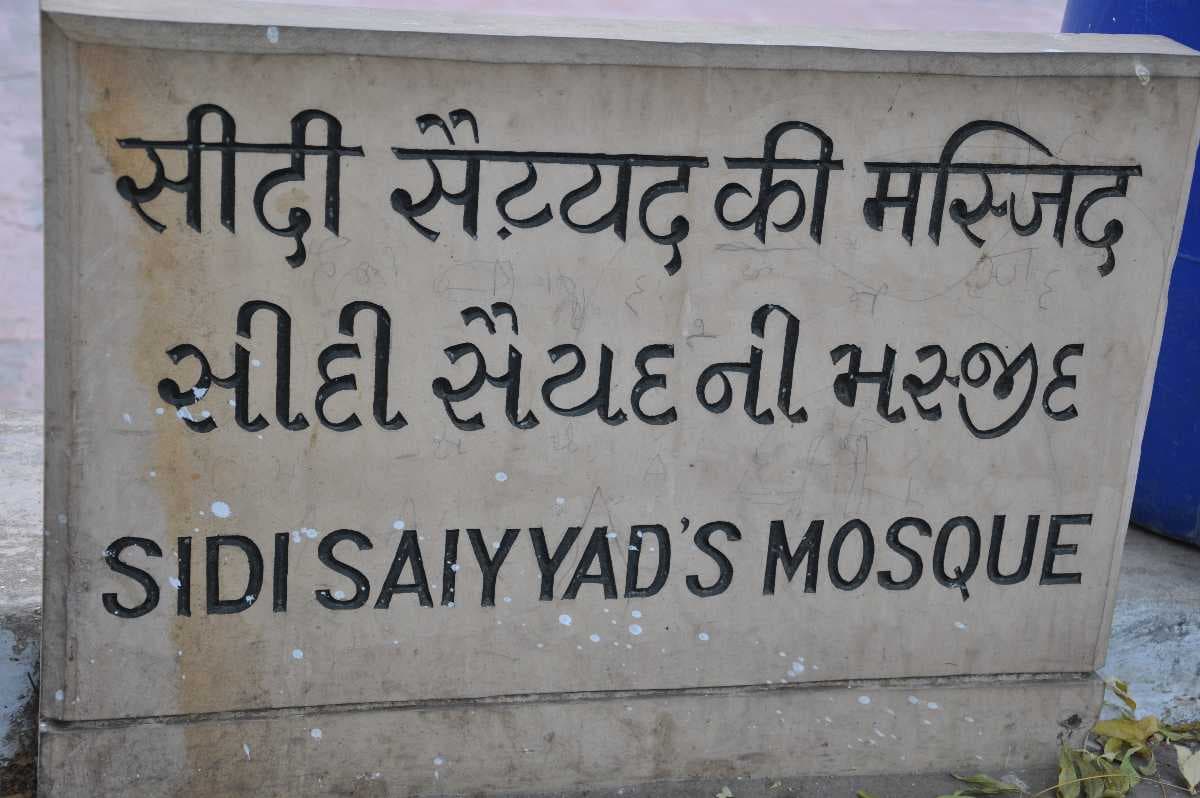
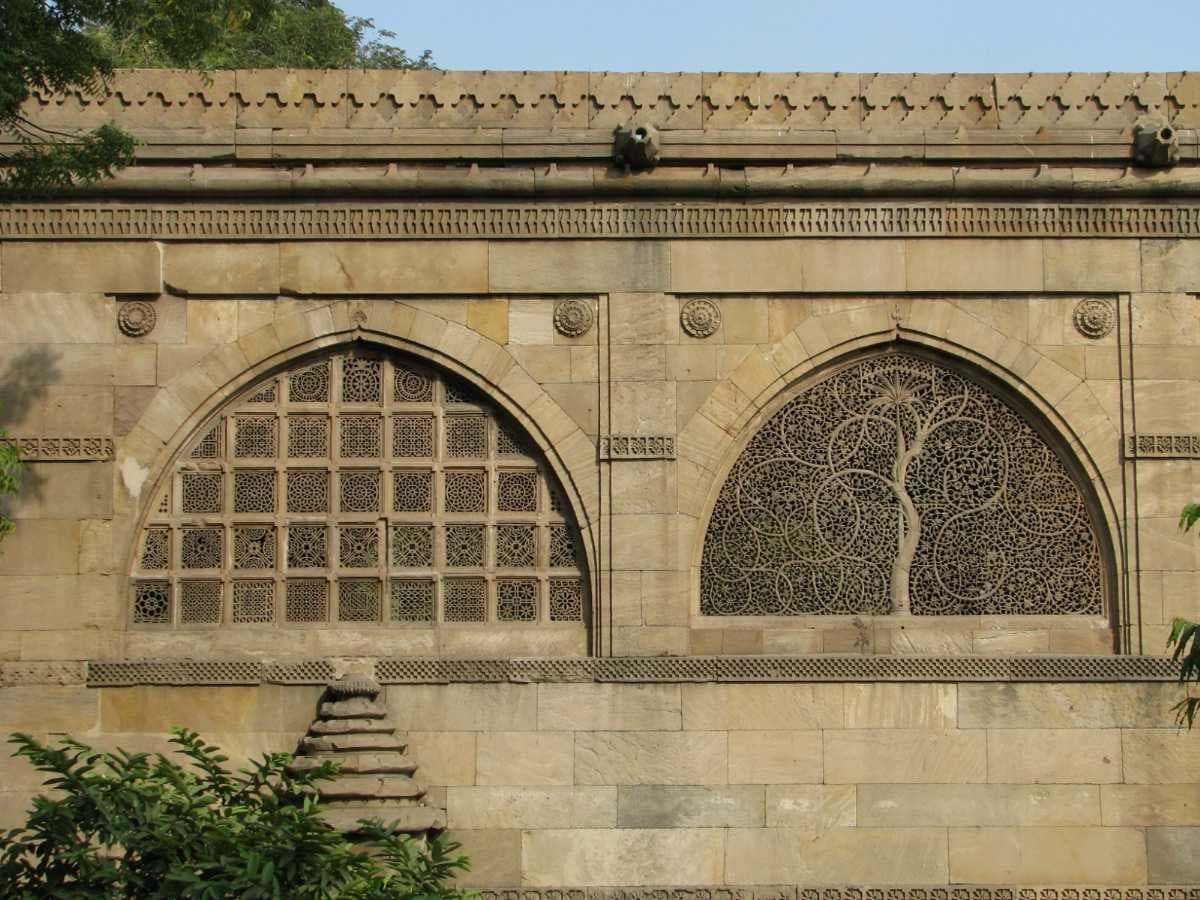
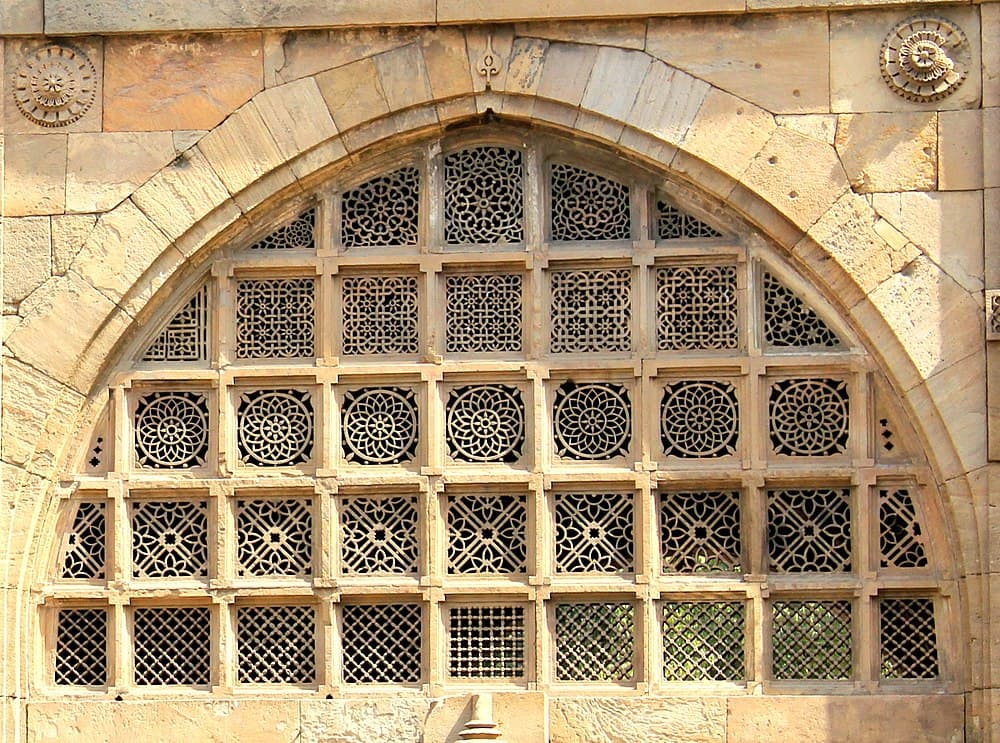
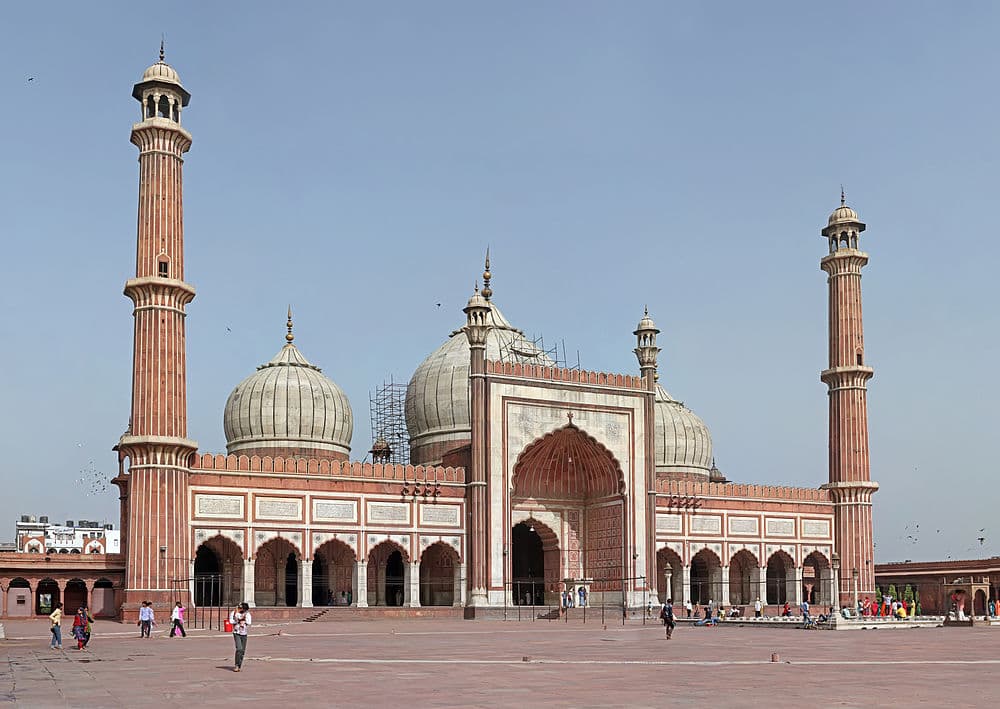
The Sidi Saiyyed Mosque, also known locally as Sidi Saiyyed ni Jali, is one of the most celebrated mosques in Ahmedabad, Gujarat, India. Built in 1572–73 by Sidi Sayyad, a Habshi nobleman, the mosque is a remarkable example of Islamic architecture and a testament to the artistic legacy of the African diaspora in India.
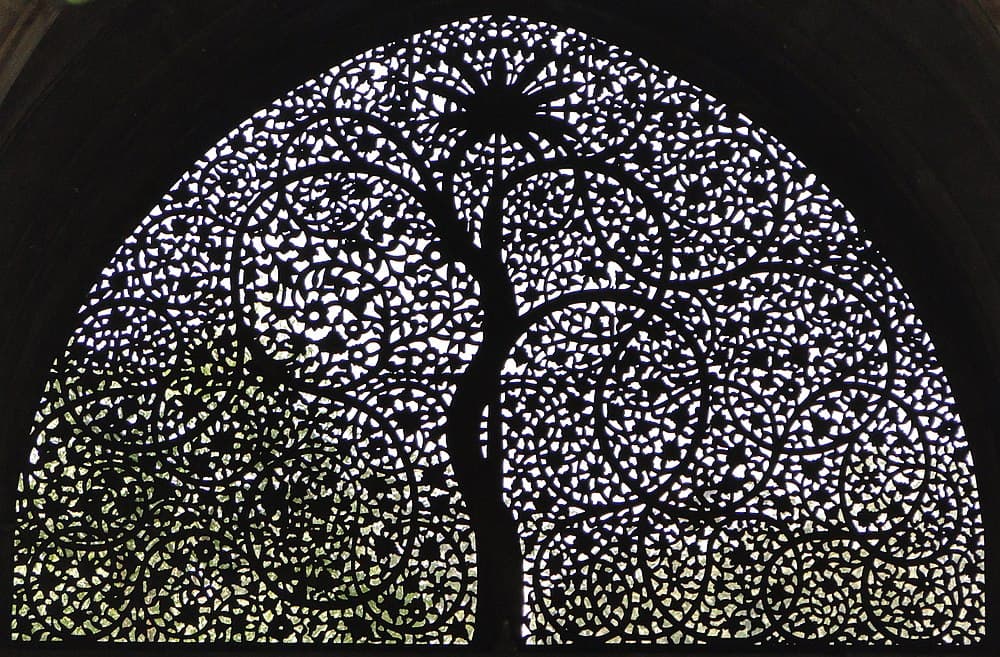
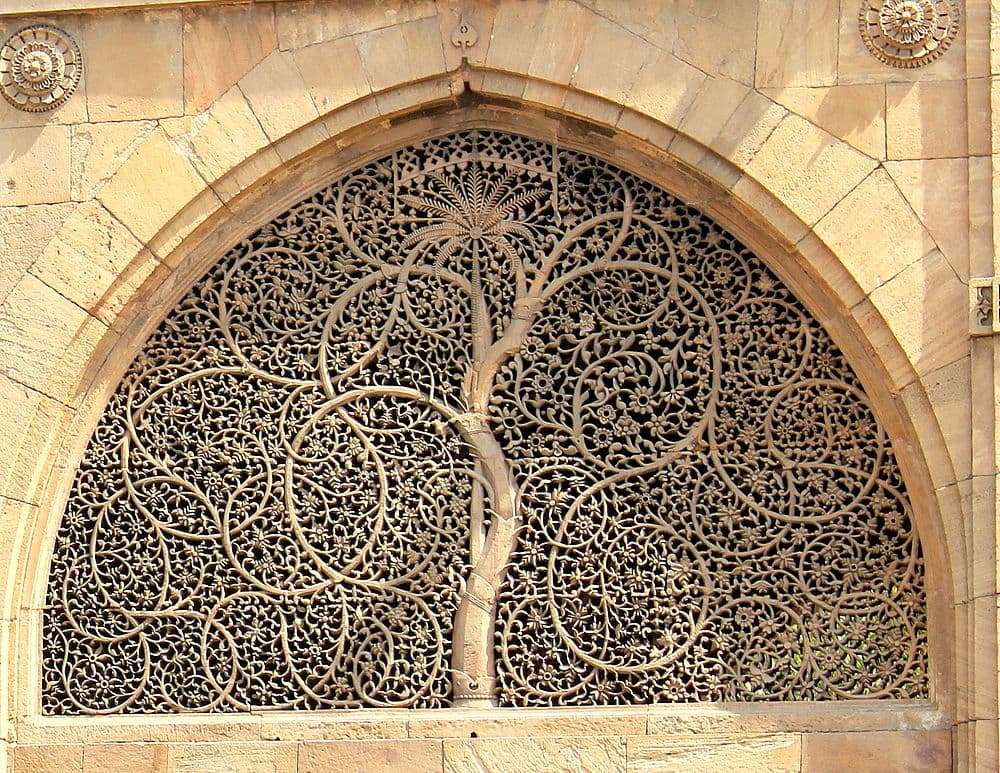
The mosque's most striking feature is its exquisite jali windows (latticework screens). These intricate stone carvings depict swirling branches and leaves, forming a mesmerizing tree of life motif. The jalis not only provided natural ventilation and light but also cast beautiful patterned shadows on the interiors. The central arch of the mosque is devoid of the intricate latticework, deliberately drawing the eye towards the main artistry on the back wall.
Sidi Saiyyed Mosque is a relatively small mosque, designed with an open prayer hall supported by arches. The eastern wall houses the mihrab, a niche indicating the direction of the Kaaba in Mecca. The mosque is a functioning place of worship, and visitors are expected to dress modestly.
Here are some additional details that you might find helpful when planning your visit to Sidi Saiyyed Mosque:
- Location: The mosque is located near Lal Darwaja, in the heart of Ahmedabad's 600-year-old walled city.
- Timings: The mosque is open to visitors from dawn to dusk.
- Entry Fee: There is no entry fee to visit the mosque.
- Dress Code: As the mosque is a functional religious site, visitors are expected to dress modestly. This means covering shoulders and knees for both men and women.
- Photography: Photography is permitted inside the mosque, but visitors are advised to be respectful of worshippers and avoid using flash.
A visit to the Sidi Saiyyed Mosque is a truly special experience. The mosque's intricate jali work is a masterpiece of Islamic art, and the mosque itself is a serene and spiritual place. If you are ever in Ahmedabad, be sure to add the Sidi Saiyyed Mosque to your itinerary.